
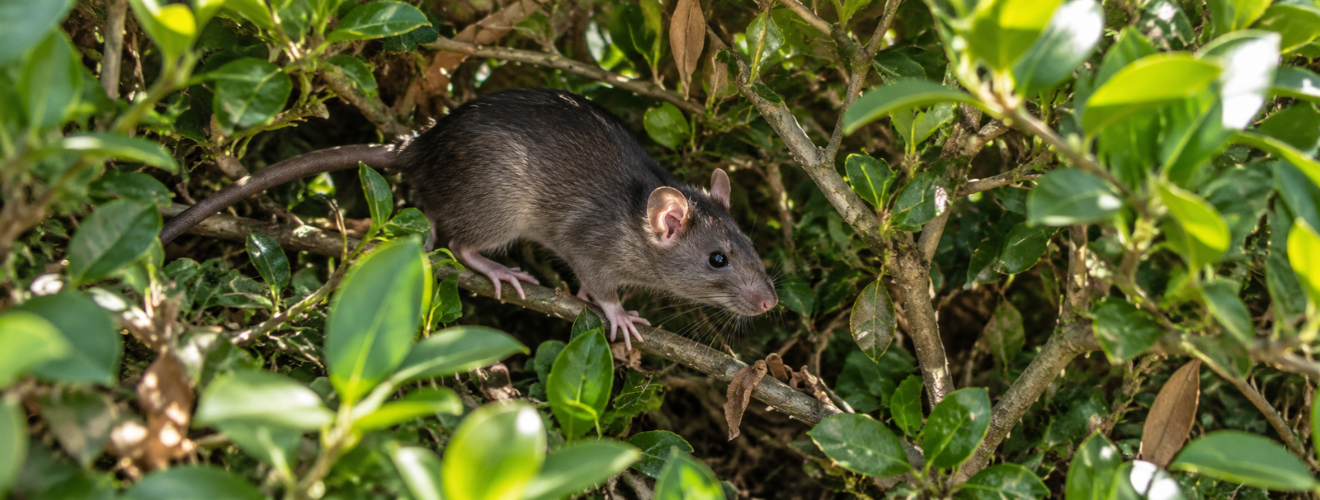
Ivy and thick hedges can give roof rats concealed places to travel, rest, and nest around your Irvine home. When that cover connects with fruit trees, fences, or the roof, rats may reach several useful resources without crossing much open ground. At Saddleback Termite & Pest Control, our rodent control services help you assess how landscaping contributes to a rat problem and whether the animals have reached the building.
You can keep a landscaped yard while reducing the sheltered routes rats use. The first step is to look beneath and behind dense growth, then consider where the plants connect to structures and food sources.
Dense Growth Provides Concealment
Roof rats are capable climbers, and a thick mass of vegetation offers many protected spaces. Ivy can cover the ground or climb a fence, while closely grown hedges may hide a continuous passage beside a wall. Rats can use those routes while moving between a nest and food elsewhere.
Planting itself leaves the source of a rat problem uncertain. A rat may nest in a tree, use a neighbor’s vegetation, and cross your hedge while feeding. We look for droppings, nesting material, worn routes, and other signs before deciding how the landscaping is involved.
In Irvine’s mild climate, dense plants can continue providing shelter during cooler months. Irrigated areas may also offer water or support other resources. Managing the conditions near your house is useful throughout the year, even when the first sightings happen in fall.
Look at Where the Plants Lead
A hedge close to the wall may hide damage near a vent or garage edge. Ivy growing into eaves can make an opening difficult to see and offer a climbing route toward it. If a tree branch touches the roof nearby, the plants and tree may provide several ways to approach the same area.
Roof rats can also travel along fences and utility routes. Pruning one branch helps reduce that particular connection, while the roofline still needs an inspection. We assess the building’s accessible openings as well as how rats reach them.
Avoid climbing into dense growth or cutting vines near electrical lines. Roof work and difficult tree trimming belong with appropriately equipped professionals. From the ground, photographs of the connections can help you describe the areas that concern you.
Food Nearby Can Encourage Repeat Visits
Fruit on trees and fallen produce can supply meals near protective cover. Birdseed, pet food, and exposed food scraps may also attract rats to the same part of the yard. A hedge becomes especially useful when it provides shelter beside a dependable feeding area.
Collect fallen fruit and secure feed in durable containers. If seed accumulates beneath a feeder, remove the spill and consider pausing feeding while rats are being controlled. Manage compost so kitchen scraps remain inaccessible to rodents.
Check irrigation fittings for leaks and avoid leaving unnecessary standing water. These changes remove resources you can control. Rats may still find food and water elsewhere, which is why landscape maintenance should be connected with an assessment of the infestation.
Thin Vegetation Enough to Inspect It
Begin with the plants against the house and beside access points. Creating visible space near a wall makes it easier to spot droppings and exterior damage. A gardener can help choose pruning methods that preserve plant health while reducing dense cover.
For ivy, inspect the edges and the places where it reaches a structure. Extensive removal may disturb animals or uncover contaminated debris, so pause if you find a nest or a large accumulation of waste. We can help you decide how pest control and landscape work should be sequenced.
Move stored items that make the planting area harder to inspect. An unused pot, lumber stack, and thick hedge together may create several layers of shelter. Reducing that clutter makes maintenance easier and helps you notice new signs sooner.
Check the House Before Sealing Anything
Outdoor sightings do not establish that rats are indoors, but scratching above a ceiling or droppings in a garage require investigation. Tell us where and when you hear or see signs so we can look for the relevant entrances.
Closing an opening while rats remain inside can trap them in the structure or change where they travel. Exclusion should follow an appropriate control plan and use materials suited to the opening. Vent protection must preserve airflow, and repairs around utilities may require another trade.
Do not scatter poison beneath hedges or leave loose bait near a fence. Pets and wildlife may reach it, and every product has specific label restrictions. Ask how any devices will be secured and checked before adding them to a landscaped area.
Maintain the Improvements After Control
Once the immediate problem is addressed, keep enough clearance to inspect walls and roof connections. Plants regrow, stored supplies accumulate, and fruit becomes available in different seasons. A periodic walk around the yard can help you catch those changes before cover becomes difficult to inspect again.
If rats are using ivy or hedges near your house, contact our team about your Irvine landscaping and rodent concerns. We can investigate the signs, assess possible routes into the building, and explain how pruning, exclusion, and control can work together.