
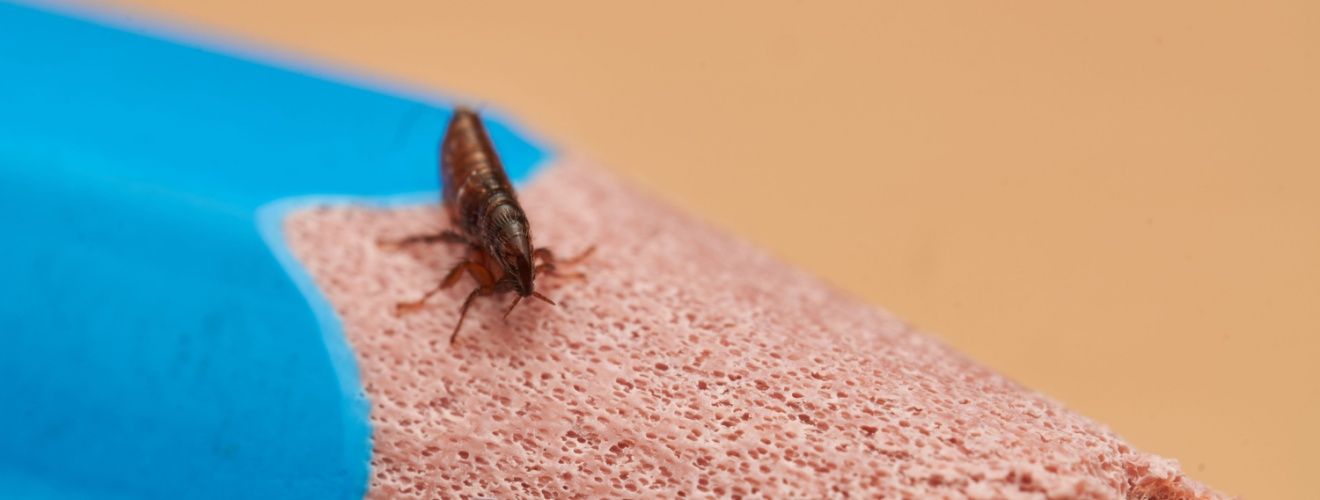
Fleas don’t take a season off in Southern California. Homeowners quickly discover that these pests aren’t limited to summer—they’re active in every month of the year. The mild climate, steady humidity, and dense suburban neighborhoods all combine to make flea control in Orange County a constant need. For families with pets, the challenge is even greater: fleas thrive on dogs and cats, then spread indoors, embedding themselves in carpets, furniture, and hidden corners of the home.
1. Mild Winters Keep Fleas Alive
In colder regions, winter acts as a natural pest control measure, reducing flea populations dramatically. But in Orange County, temperatures rarely dip low enough to disrupt their life cycle. Fleas remain active outdoors in shaded soil, under decks, and around landscaped areas, waiting for the next opportunity to latch onto a passing pet. This uninterrupted survival means infestations can build steadily from one season to the next, with no natural pause to reset populations.
For homeowners, this translates into a constant battle. Even if you treat your pets during the summer, fleas can reappear in winter because they never truly die off. The absence of freezing conditions allows fleas to maintain their reproductive cycle year‑round, making infestations more stubborn and harder to eliminate without consistent, professional intervention.
2. Humidity Creates Ideal Breeding Conditions
Flea eggs and larvae require moisture to develop, and Orange County’s environment provides plenty of it. Coastal humidity, irrigation systems, and shaded gardens all create microclimates where fleas thrive. Even inland areas that seem dry can harbor flea populations thanks to sprinklers, pet water bowls, and condensation around HVAC systems. These small pockets of moisture are enough to sustain flea colonies throughout the year.
This constant access to humidity means fleas don’t just survive—they flourish. Eggs hatch quickly, larvae mature, and adults continue feeding and reproducing without interruption. Homeowners often underestimate how much their landscaping contributes to flea problems, but the truth is that lush lawns and well‑watered gardens can become breeding grounds that fuel indoor infestations.
3. Dense Pet Populations Spread Infestations
Orange County is home to a large number of dogs and cats, and fleas take full advantage of this. A single untreated pet can introduce fleas into a household, and once inside, the pests spread rapidly. Fleas don’t just stay on pets—they jump onto carpets, furniture, and even clothing, creating a cycle that’s difficult to break. This is why pet flea control in Orange County is essential for preventing recurring outbreaks.
The social nature of the community also plays a role. Dog parks, walking trails, and neighborhood gatherings provide opportunities for fleas to transfer from one pet to another. Without consistent prevention, infestations can spread quickly across households, making it a community‑wide issue rather than an isolated problem.
4. Indoor Environments Protect Fleas Year‑Round
Once fleas enter a home, they don’t need the outdoors to survive. Carpets, upholstery, and bedding provide warmth and shelter, allowing fleas to continue their life cycle indoors. Eggs and larvae remain hidden in fibers and cracks, waiting to mature, which means infestations can persist for months even if pets are treated.
This hidden activity is what makes indoor infestations so frustrating. Homeowners may believe they’ve solved the problem after treating their pets, only to find fleas reappearing weeks later. Without addressing the indoor environment, infestations rebound, creating a cycle that feels endless. Professional indoor flea treatment is often the only way to fully eliminate these pests.
5. Continuous Reproduction Cycle
Fleas reproduce at an astonishing rate. A single female can lay dozens of eggs each day, and in Orange County’s climate, this cycle never slows down. Eggs fall into carpets, cracks, and pet bedding, where they hatch and mature into adults ready to feed and reproduce again. This constant cycle means infestations can grow exponentially in a short period of time.
Breaking this cycle requires more than just surface treatments. DIY sprays often kill adult fleas but leave eggs and larvae untouched. Without comprehensive treatment, infestations return stronger than before. Professional pest control targets every stage of the flea life cycle, ensuring that the population is reduced and prevented from rebounding.
Risks to Pets and Homeowners
Fleas may be small, but the impact they have on pets can be surprisingly severe. Beyond the constant scratching and irritation, fleas act like tiny saboteurs of your pet’s health. Their bites can trigger hypersensitive reactions that leave animals restless, unable to sleep, and prone to skin infections from excessive licking or chewing. In prolonged infestations, the blood loss from repeated feeding can weaken younger or smaller pets, leaving them vulnerable to fatigue and illness. Even more concerning, fleas are carriers of internal parasites such as tapeworms, which pets ingest when grooming themselves. What begins as a nuisance quickly escalates into a cycle of discomfort and health complications that no pet owner wants to see.
Homeowners face their own set of challenges when fleas invade. These pests don’t confine themselves to pets—they spread into carpets, furniture, and bedding, turning living spaces into breeding grounds. Flea bites on humans often appear in clusters around ankles or legs, leaving itchy welts that can persist for days. But the problem goes beyond physical irritation. A flea infestation can disrupt daily life, making families hesitant to let pets indoors or even sit comfortably on their own couches. The psychological toll of knowing your home is crawling with parasites is real, and it often drives homeowners to seek quick fixes that only mask the problem. Without comprehensive indoor treatment, fleas continue to rebound.
Keeping Fleas Out Every Season
Fleas in Orange County aren’t a problem that fades with the seasons—they’re a constant presence that adapts to the mild climate and thrives in homes year‑round. Left untreated, infestations multiply quickly, spreading from pets to carpets, furniture, and hidden corners, creating a cycle that frustrates homeowners and puts pets at risk. The reality is simple: keeping fleas out every season requires more than temporary sprays or DIY fixes. It demands a comprehensive approach that eliminates active pests, disrupts their reproduction, and shields your home against reinfestation.
Families who want real protection need a team that understands how fleas exploit Southern California’s environment and how to stop them before they spread. Saddleback Termite & Pest Control delivers solutions that go deeper than surface treatments, breaking the cycle of infestation and keeping households safe throughout the year. With proven methods and local expertise, we help homeowners protect their pets and living spaces without the stress of recurring outbreaks. Reach out to Saddleback Termite & Pest Control today to keep fleas out every season.