
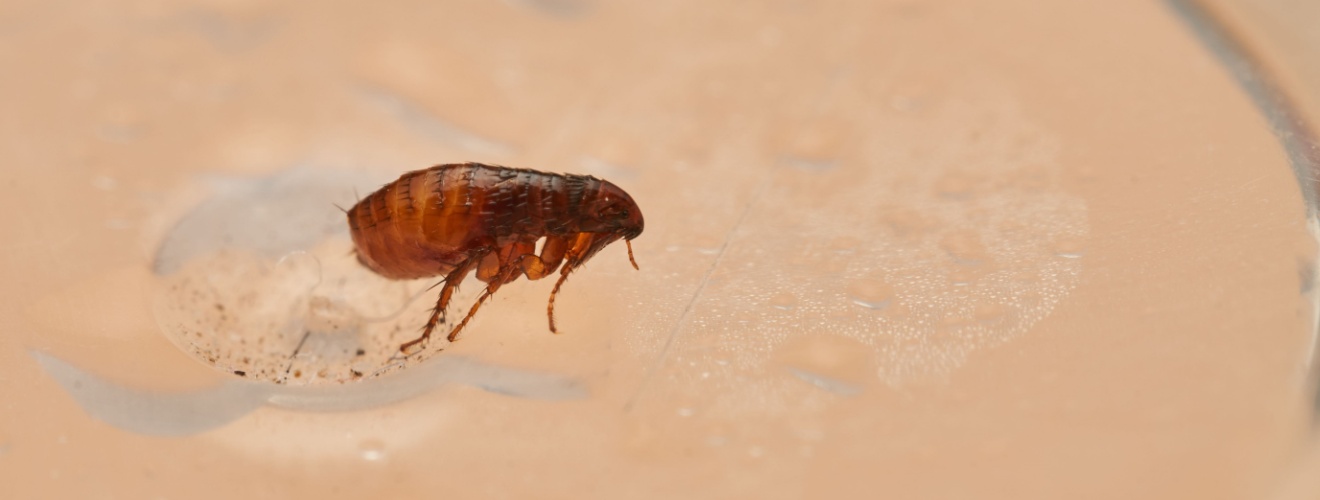
Spraying or sprinkling store-bought remedies may feel like progress, but many homeowners quickly discover that flea treatment in Irvine, CA doesn’t always succeed when it’s a DIY effort. Fleas are stubborn parasites, and the reality is that over‑the‑counter fixes often mask the issue instead of solving it. That’s why it helps to look closer—here are the main reasons these treatments often fail in Irvine households.
1. Fleas Hide in Hard‑to‑Reach Places
Unlike many household pests that stay visible, fleas thrive in the shadows. They slip into places most homeowners overlook, such as the seams of upholstered furniture, the gaps between floorboards, and the underside of rugs. These areas are difficult to treat with sprays or powders, which means a large portion of the flea population remains untouched even after a DIY attempt. The result is an infestation that seems to vanish temporarily but resurfaces once the hidden fleas reemerge.
Irvine homes, with their mix of carpeted rooms, layered furniture, and outdoor-to-indoor transitions, create countless micro-habitats where fleas can survive unnoticed. A single untreated corner of a sofa or a crack near a baseboard can harbor dozens of fleas waiting for the right conditions to spread again. Because DIY products are often applied only to obvious spots, these concealed zones become safe havens that allow infestations to persist.
Some of the most common overlooked hiding places include:
- Furniture seams where fleas burrow deep into cushions
- Baseboard cracks that provide dark, protected crevices
- Carpet fibers that trap eggs and larvae
- Pet bedding that remains infested even after washing
- Under rugs where fleas thrive away from foot traffic
Breaking through these hidden areas requires more than surface treatment. It takes a methodical approach that identifies overlooked spaces and applies solutions where fleas are most entrenched. Without that level of detail, infestations remain embedded in the home, ready to flare up again.
2. Eggs and Larvae Survive Treatments
One of the biggest challenges with fleas is their complex life cycle. DIY sprays and powders often target adult fleas but fail to address the eggs and larvae that are tucked away in protected environments. These immature stages can survive for weeks, waiting to hatch and restart the infestation. Homeowners may feel relieved after an initial treatment, only to find fleas reappearing in full force once the next generation emerges.
The resilience of flea eggs is particularly problematic in Irvine’s climate. Warm temperatures and moderate humidity create ideal conditions for eggs to remain viable, even in areas that seem clean. Carpets, pet bedding, and cracks in flooring can all harbor eggs that are resistant to surface treatments. Without breaking the life cycle, infestations continue in waves, frustrating homeowners who thought they had solved the problem.
The only way to stop this cycle is to disrupt every stage of flea development. That means targeting eggs before they hatch, larvae before they mature, and adults before they reproduce. DIY products rarely achieve this balance, which is why infestations often return despite repeated efforts.
3. Over‑the‑Counter Products Lack Strength
Store‑bought flea remedies are intentionally formulated to be safe for general use, which often means they are less potent than specialized solutions. While this makes them accessible to homeowners, it also limits their effectiveness. A spray or powder may kill some fleas on contact, but it rarely eliminates the infestation entirely. This reduced strength is one of the main reasons why DIY flea treatments not working is such a common complaint in Irvine.
Another issue is that many retail products are broad‑spectrum rather than targeted. They may contain ingredients that repel fleas temporarily but do not fully eradicate them. As a result, homeowners may see short‑term relief but find the pests returning within days or weeks. This cycle of partial success followed by reinfestation leads to wasted time and money, as well as ongoing discomfort for pets and family members.
To truly eliminate fleas, treatments need to be strong enough to reach deep infestations and precise enough to avoid unnecessary exposure. Over‑the‑counter products simply don’t have the capacity to deliver that balance, leaving households stuck in a loop of temporary fixes.
4. Fleas Reinfest Through Pets and Yards
Even if a homeowner manages to reduce flea numbers indoors, the problem often returns because fleas can reenter from outside sources. Pets are the most common carriers, picking up fleas from yards, parks, or even brief encounters with other animals. Once inside, these fleas quickly spread throughout the home, undoing any progress made with DIY treatments.
Outdoor environments in Irvine provide ideal breeding grounds for fleas. Shaded lawns, gardens, and patios can all harbor flea populations that remain unnoticed until pets bring them indoors. DIY treatments rarely address these exterior areas, which means infestations continue to cycle between the yard and the home. Without a comprehensive approach, fleas keep coming back after treatment, leaving homeowners stuck in a frustrating loop.
Long‑term success requires a strategy that covers both indoor and outdoor spaces. Without addressing the yard, patios, and pet pathways, fleas will continue to reinfest homes no matter how many times the interior is treated.
5. Misapplication Reduces Effectiveness
Even when homeowners purchase the right products, improper application often undermines their effectiveness. Sprays may be applied too lightly, powders may be scattered unevenly, or key areas may be missed entirely. Fleas are opportunistic, and any untreated zone becomes a safe refuge where they can survive and repopulate. This is why over-the-counter flea treatments not working is such a widespread issue.
DIY treatments also tend to be one‑time efforts rather than part of a consistent plan. Fleas require repeated, strategic applications to fully eliminate them, but many homeowners stop after a single attempt. Without follow‑up, the infestation quickly rebounds, leaving families wondering why their efforts failed. The lack of consistency is a major factor in ongoing flea problems.
Common mistakes that reduce effectiveness include:
- Applying too little product so fleas survive exposure
- Missing key areas like pet resting spots or baseboards
- Using the wrong formulation not designed for fleas
- Stopping after one application instead of repeating as needed
- Failing to treat outdoor zones where fleas reinfest the home
Effective flea control depends on precision and persistence. Without both, infestations linger and return, no matter how many times a product is applied.
Why Professional Flea Control Works Better
DIY solutions often miss the mark because they fail to interrupt the flea life cycle and overlook the hidden zones where infestations thrive. Professional flea control, on the other hand, uses targeted methods that address every stage of development—eggs, larvae, pupae, and adults—while covering both indoor and outdoor environments. This comprehensive approach is especially important in Irvine, where warm weather and active pets create conditions that allow fleas to rebound quickly after incomplete treatments. By combining stronger formulations with precise application, professionals deliver results that last, not just temporary relief.
When repeated DIY attempts don’t solve the problem, the smarter step is to turn to local specialists who know how to stop fleas at the source. Reach out to Saddleback Termite & Pest Control today for dependable flea extermination in Irvine, CA. Since 2008, our family‑owned team has helped homeowners protect their pets, families, and living spaces with safe, effective solutions tailored to the challenges of flea infestations in Irvine.